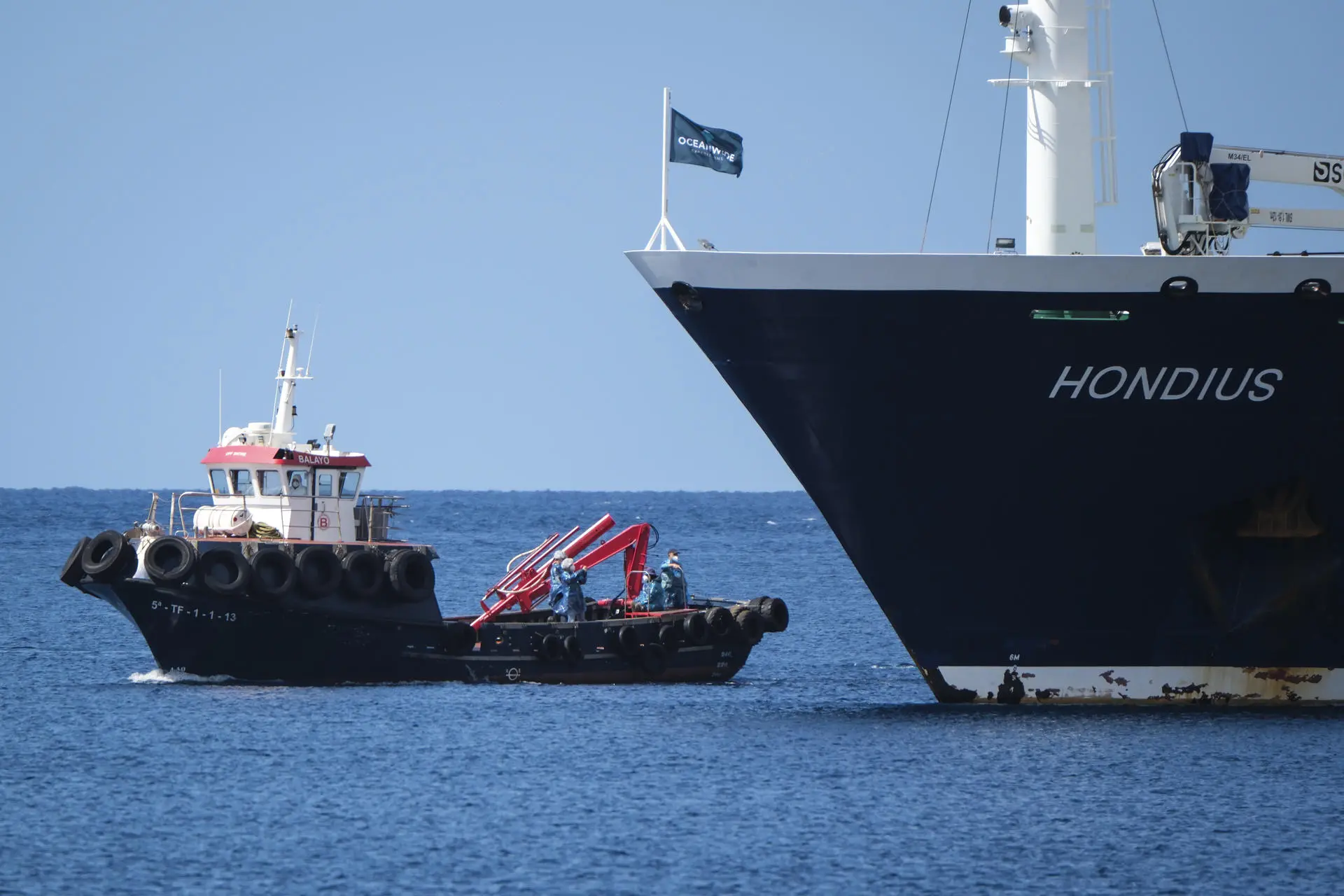



U.S. Cruise’s Passengers Arrives to Nebraska Under Strict Hantavirus Vigilance
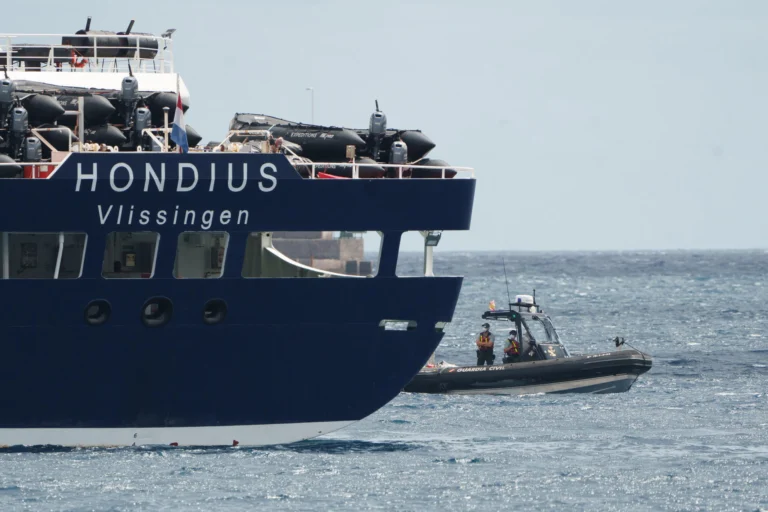
The cruise landed off the coast of the Canary Islands, from where the Spanish government carried out the repatriation of passengers under strict safety protocols. Photo: EFE.
May 11, 2026 Hour: 6:04 pm
🔗 Comparte este artículo
Seventeen U.S. citizens, who were onboard the MV Hondius cruise ship, arrived on May 11 at the University of Nebraska Medical Center in Omaha.
The group of seventeen repatriated U.S. citizens includes one suspected positive case of Hantavirus, while two individuals were flown to Atlanta for further evaluation and medical attention. These individuals were part of a larger group of 208 occupants, comprising both passengers and crew, who commenced their voyage aboard the MV Hondius from Argentina, on April 1.
RELATED: Hantavirus Cruise Ship Evacuation Begins in Tenerife
The passengers, repatriated from the Canary Islands, are now undergoing monitoring and evaluation in a specialized quarantine unit to prevent the further spread of a Hantavirus outbreak that began in April.
The situation rapidly escalated due to the specific characteristics of the detected virus. The World Health Organization (W.H.O.) has indicated that this particular outbreak involves the Andes variant, a strain notable for its capacity to transmit directly from person to person.
W.H.O. Director Tedros Adhanom Ghebreyesus clarified that this specific Hantavirus strain, which is indigenous to regions including Argentina and Chile, can spread through close and prolonged contact with infected individuals. Beyond the three reported fatalities and confirmed infections since April 11, an additional twelve countries are actively monitoring passengers who disembarked from the cruise ship earlier.
From the Canary Islands, passengers were repatriated to more than twenty nations under stringent health and safety protocols, emphasizing the global nature of this public health event.
Global Health Vigilance
The Hantavirus outbreak has garnered significant international attention, prompting responses from various governmental and health authorities. Last week, U.S. President Donald Trump affirmed his awareness of the evolving situation and expressed his expectation that the outbreak would soon be brought “under control.”
While Hantavirus is conventionally understood as a zoonotic disease, primarily transmitted by rodents, the unique ability of the Andes strain to facilitate interhuman contagion has generated a heightened level of international concern among public health officials worldwide.
The MV Hondius made several stopovers, including Antarctica, the Malvinas Islands, South Georgia, Tristan da Cunha and Saint Helena, before the global emergency was officially confirmed. Despite experts considering a widespread outbreak improbable, the W.H.O. maintains close vigilance over citizens from the twenty-three nationalities who were potentially exposed during the vessel’s journey toward the Canary Islands.
Hantavirus is primarily transmitted through the inhalation of microscopic particles from the urine, feces, or saliva of infected rodents. However, in the case of the Andes variant, initial symptoms, such as fever, muscle aches, and gastrointestinal discomfort, can rapidly progress to Hantavirus Cardiopulmonary Syndrome (HPS), a severe respiratory condition that necessitates immediate medical support.
The W.H.O. has reiterated that there is currently no specific vaccine or antiviral treatment available for Hantavirus. Consequently, prevention strategies are heavily reliant on reducing contact with rodents and diligently adhering to rigorous hygiene practices. These measures include ensuring adequate ventilation in enclosed spaces and disinfecting areas susceptible to contamination with chlorinated solutions before undertaking any cleaning activities.
This proactive approach remains the most effective defense against the virus’s spread and its potentially severe health consequences, underscoring the importance of public awareness and adherence to health guidelines.
Author: Laura V. Mor
Source: Agencies/ W.H.O